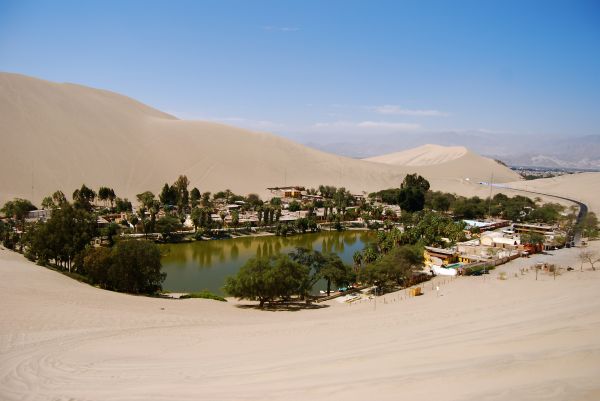
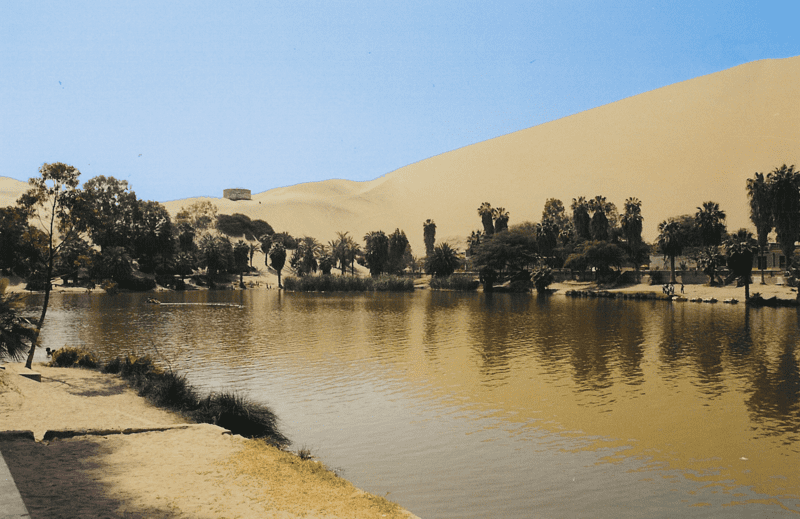
In geography, an oasis (plural: oases or oasi) or cienega (Southwestern United States) is an isolated area of vegetation in a desert, typically surrounding a spring or similar water source. Oases also provide habitat for animals and even humans if the area is big enough. The location of oases has been of critical importance for trade and transportation routes in desert areas. Caravans must travel via oases so that supplies of water and food can be replenished. Thus, political or military control of an oasis has in many cases meant control of trade on a particular route. For example, the oases of Awjila, Ghadames and Kufra, situated in modern-day Libya, have at various times been vital to both North-South and East-West trade in the Sahara.
Oases are formed from underground rivers or aquifers such as an artesian aquifer, where water can reach the surface naturally by pressure or by man made wells. Occasional brief thunderstorms provide subterranean water to sustain natural oases, such as the Tuat. Substrata of impermeable rock and stone can trap water and retain it in pockets; or on long faulting subsurface ridges or volcanic dikes water can collect and percolate to the surface. Any incidence of water is then used by migrating birds who also pass seeds with their droppings which will grow at the water’s edge forming an oasis.